RU
RU
 ES
ES



Advantages of Licensing Investment Companies in Cyprus
| High credibility | Tax efficiency | Simplified compliance | Access to the EU market | Legal predictability |

We ensure full compliance with CySEC requirements: from document preparation to the company’s final authorization.

| High credibility | Tax efficiency | Simplified compliance | Access to the EU market | Legal predictability |

of experience in international consulting

crypto licenses obtained

successful complex cases

completed projects

supported jurisdictions

lawyers, auditors, and consultants
A Cyprus Investment Firm (CIF) is a legal entity incorporated in the Republic and authorized to provide services or conduct investment activities.
1. Corporate Structure and Scope of Activity
The applicant must be a Cyprus-registered company established specifically for regulated activities, rather than for general commercial business.
2. Directors and Governance Bodies
The management of a CIF must possess an impeccable reputation and sufficient experience to ensure sound and prudent management.
3. Shareholders and Qualifying Holdings
The Cyprus Securities and Exchange Commission (CySEC) may refuse to grant a license if it is not satisfied with the suitability of direct or indirect shareholders holding a qualifying participation.
Transparency of beneficial ownership is confirmed through shareholder questionnaires and notification of qualifying holdings.
4. Capital and Own Funds
The required capital depends on the type of services provided:
Initial capital includes CET1, AT1, and Tier 2 capital components, while own funds must comply with prudential requirements.
5. Organizational Requirements and AML
The company is required to implement:
The scope of the license depends on the applicant’s business model, internal control system, capital structure, and risk management framework.
| Regulated Activity | Practical Scope | Typical Use Case |
| Reception and transmission of orders | Receiving client instructions and transmitting them for execution to another broker, trading venue, or financial institution | Introducing broker, matched principal model, or intermediary activity |
| Execution of orders on behalf of clients | Executing client orders in relevant financial instruments | Brokerage and trading services |
| Dealing on one’s own account | Trading against the firm’s own balance sheet | Principal trading activity, market-facing trading operations |
| Portfolio management | Managing portfolios under discretionary mandates | Private wealth management and professional investment mandates |
| Investment advice | Providing personalized recommendations to an investor regarding specific instruments or transactions | Advisory firm model |
| Underwriting and/or placing on a firm commitment basis | Undertaking obligations to acquire and place securities or other instruments | Capital raising, issuance, corporate finance |
| Placing without a firm commitment basis | Arranging the distribution of instruments without assuming underwriting risk | Private placements and capital markets support |
| Operation of an MTF | Operating a multilateral trading facility | Advanced trading platform structure |
| Operation of an OTF | Operating an organized trading facility | Specialized institutional or platform-based activity |
The scope of the license under MiFID II is determined by the categories of instruments:
Cyprus combines a well-developed regulatory framework with an efficient operating environment. Its status as an international business center, access to highly qualified professionals, and simplified incorporation procedures make the jurisdiction attractive for establishing a financial business.
| Advantage of Cyprus | Value for an Investment Firm |
| EU and Eurozone membership | Provides access to the European market and strengthens the status of a regulated company operating within the EU legal framework. |
| Alignment with the English common law | Increases legal predictability for contracts, corporate structuring, shareholder agreements, and commercial documentation. |
| Oversight by the Cyprus Securities and Exchange Commission | Enhances the credibility of the license through recognized regulatory supervision, public registration, and ongoing oversight. |
| Competitive corporate tax regime | Makes Cyprus commercially attractive for international groups establishing a regulated business platform. |
| Developed a professional services ecosystem | Enables a licensed firm to organize legal, accounting, and compliance support within a single jurisdiction. |
Authorization by CySEC is not a formal registration, but a staged confirmation of the business’s operational readiness.
1. Defining the Regulatory Perimeter and Structuring
The company determines the range of services and categories of financial instruments, which affects:
2. Preparation of the Documentation Package
The application file includes:
3. Submission and Review
After payment of the fee and submission of the application, board members bear personal responsibility for the accuracy of the information provided. The regulator reviews the application as an official document for expert assessment, not as marketing material.
4. Regulatory Assessment
Cyprus Securities and Exchange Commission assesses the company’s compliance with:
5. Capital Confirmation
At the final stage, CySEC may require confirmation from one or more credit institutions that the entire legally required initial capital has been deposited into a bank account and will remain blocked until the CIF authorization is granted.
6. License Issuance and Commencement of Activities
Following approval, the company may begin regulated activities within the scope of the granted authorization. However, a CIF license will be revoked if it is not used within 12 months of issuance or if no investment activity has been carried out during the previous 6 months.
7. Cross-Border Expansion
To provide services in other EEA states, a licensed company may use the “passporting” procedure. The process involves the submission of forms for:
CySEC makes its decision within six months of the submission of a fully completed application file. The overall timeframe depends on the quality of document preparation and the legal structure of the business.
The cost is determined individually for each project and includes government fees, legal support expenses, translation costs, and banking fees.
According to the current guidelines of the Cyprus Tax Department, companies that are controlled or managed in Cyprus are considered tax residents of the Republic and are taxed on income derived both within and outside the country.
Tax Profile
| Tax Aspect | Cyprus Position |
| Corporate income tax | The officially established standard corporate tax rate is 12.5%. |
| Tax residency | Companies controlled or managed in Cyprus are considered tax residents of the Republic. |
| Taxable base | Cyprus tax residents are taxed on income generated both in Cyprus and abroad. |
| Dividend income | Foreign dividends may be exempt from corporate income tax; SDC treatment depends on statutory tests. |
| Disposal of securities | Income from the sale or trading of securities is treated as tax-exempt. |
| Capital gains tax | Primarily applies to Cyprus real estate and certain related share sale transactions; the published rate is 20%. |
| Withholding tax on outbound payments | Generally, no withholding tax is imposed on dividends, interest, or royalties paid to non-residents, except for payments to EU blacklisted jurisdictions. |
| Double tax treaty network | The double taxation treaty network covers 68 countries. |
| Clearly structured process
A systematic approach to document preparation eliminates critical errors and ensures predictable licensing timelines. |
| Comprehensive legal support
Assistance at every stage: from document preparation to obtaining the license. |
| International expertise
Expertise in licensing and cooperation with financial regulators across various jurisdictions. |
| Professional team
Lawyers and fintech consultants with many years of practical experience. |
| Transparent terms
Pre-agreed cooperation terms and predictable results at every stage. |
Prifinance brings together experts in financial law and licensing. We provide comprehensive project support – from initial legal structuring and determination of the regulatory scope to final authorization by the Cyprus Securities and Exchange Commission.


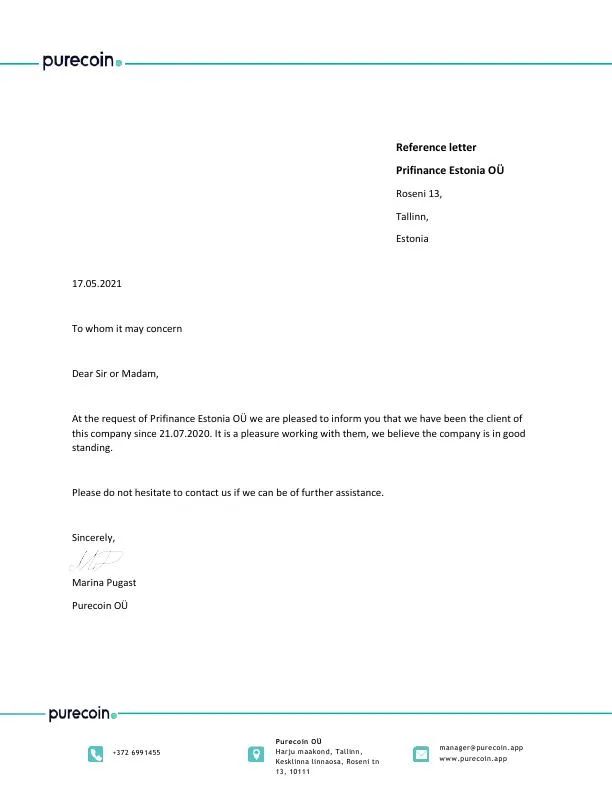
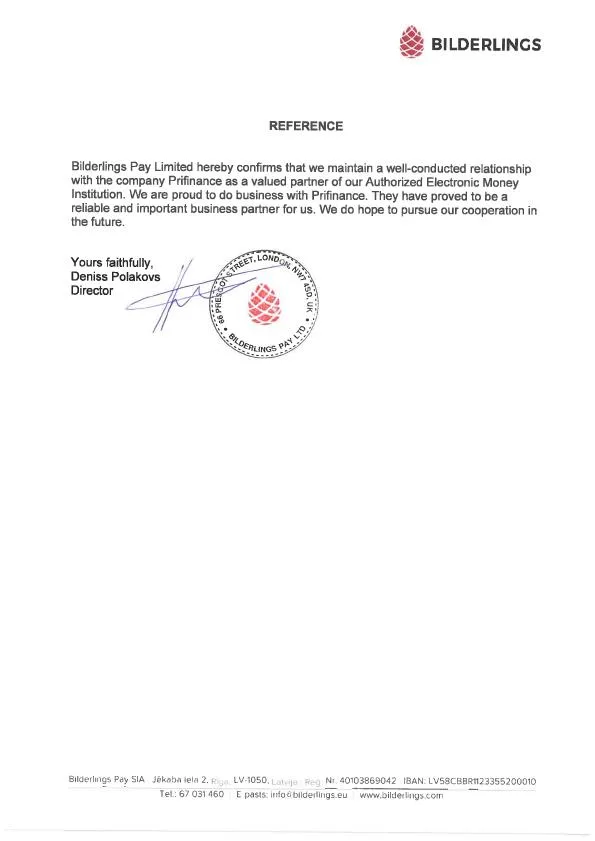
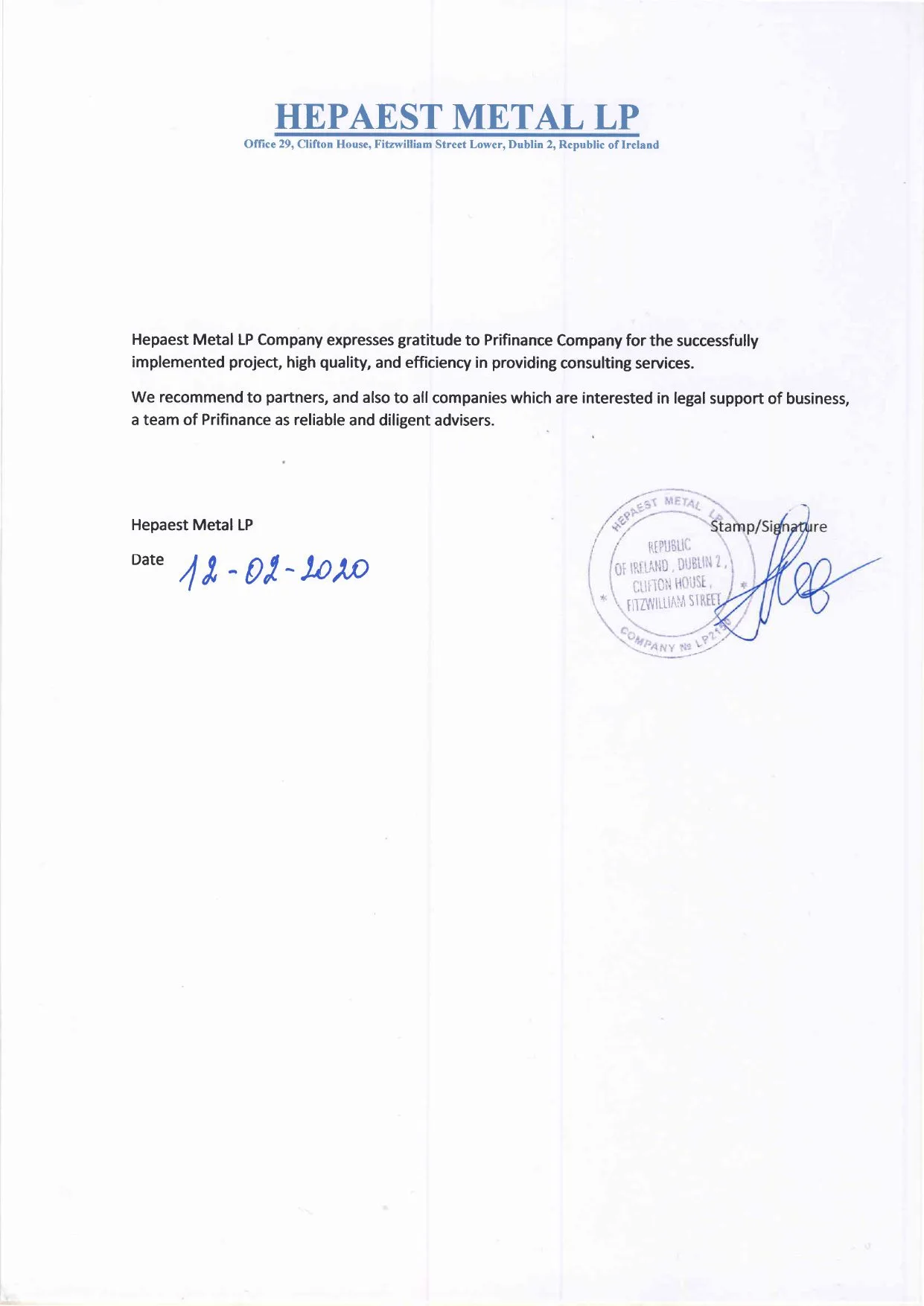
Testimonials








It is an official regulatory authorization for a Cyprus company to provide investment services as a CIF. Unlike ordinary incorporation, the license grants the business the status of a regulated financial entity.
The competent authority is the Cyprus Securities and Exchange Commission. The regulator assesses the governance system, shareholders, capital, internal controls, and documentation, and conducts ongoing supervision.
The scope of authorization depends on the specific investment and ancillary services specified in the application and, under the MiFID II framework, includes:
- reception and transmission of orders;
- execution of orders;
- dealing on one's own account;
- portfolio management;
- provision of investment advice;
- underwriting and placement of financial instruments;
- operation of trading venues.
The amount of capital depends on the business model and range of services. Under CySEC prudential requirements, the thresholds may amount to:
- EUR 75,000;
- EUR 150,000;
- EUR 750,000.
By law, CySEC must issue a decision within 6 months of the submission of a duly completed application. The timeframe depends on the availability of all required documents, forms, and payment of fees.
Foreign participation is permitted provided there is transparency, suitability, and accessibility for supervision. CySEC verifies whether the ownership structure is compatible with sound management and whether “close links” hinder effective supervision.
A licensed firm may use the MiFID II “passporting” mechanism to provide services across EU/EEA countries. Under Article 34 of MiFID II, once the home regulator notifies the host authority, the company may commence activities in that state within one month.
The regulator requires the company to maintain:
- real substance;
- the CIF’s head office in the Republic;
- qualified personnel;
- administrative and accounting procedures;
- internal control and risk management systems;
- record-keeping and data retention procedures;
- a genuine operational structure.
The standard corporate tax rate is 12.5%. The tax system includes a network of double taxation treaties with 68 countries, exemptions for certain dividends and capital gains income, as well as no tax on profits from trading securities.
The main causes of delays are incomplete documentation, weak governance, unclear ownership structures, and inconsistencies between the application and legislation. CySEC returns incomplete application packages, while the board of directors bears responsibility for the accuracy of the submitted information. A license may be revoked if it is not used within 12 months or if activities are suspended for 6 months.
Cooperation