
Header Background

Get an Australia Crypto License

Launch a turnkey crypto business in Australia and get a fast track to the global market with an Australian crypto license.

  • Client rights protection
  • APAC region
  • Clear requirements
  • Timeframe: from 2 months
  • Taxes: 25-30%
Specialist - Partner
Expert with 15 years of experience in FinTech, payments, and business strategy.
Table of contents
Table of contents
Send an application

Send your request now and receive our personalized offer!


    Regulation of cryptocurrency business in Australia

    For licensing a cryptocurrency company or exchange, Australia has become one of the world’s most progressive jurisdictions. The country’s combination of a developed regulatory environment, a transparent legal framework, and a powerful financial system creates an attractive environment for crypto companies and Virtual Asset Service Providers (VASPs).

    This stability is attracting significant interest from international and local crypto exchanges, drawn to the transparent licensing rules and unambiguous licensing requirements. At the center of this regulatory oversight is AUSTRAC, the Australian Transaction Reports and Analysis Centre, which monitors all crypto exchanges. This governmental body is focused on upholding strict AML/CTF standards and consumer rights protection.

    The country’s regulatory approach combines strict standards for crypto trading, wallet services, and blockchain projects with real innovation. An Australian crypto license is a strong fit for exchanges, custodial services, and fintech consultants. Launching a project there opens local and regional markets and provides entry to the global stage.

    Who should consider Australia for their crypto business?

    • Ambitious crypto startups planning to launch an exchange, payment service, or their own wallet for the Asia-Pacific market.
    • Established international companies and major investors seeking a reliable, regulated environment to handle digital assets with confidence.
    • Fintech teams and consultants that require transparent rules, clear requirements for the license, and predictable regulation to operate effectively.
    • Foreign investors seeking a stable, tax-advantageous jurisdiction with access to global markets.
    • Enterprises on a fast track that want to get licensed quickly and solidify trust with international partners.

    In the end, it’s this unique balance of supportive business environment paired with strict standards that makes Australia a top-tier jurisdiction for crypto exchanges and services aiming for growth in the Asia-Pacific region and beyond.

    Advantages of working with Prifinance:

    30 years

    of experience in international consulting

    400+

    crypto licenses obtained

    100+

    successful complex cases

    10 000+

    completed projects

    40

    supported jurisdictions

    100+

    lawyers, auditors, and consultants

    Activities authorized by a crypto license

    Securing a crypto license in Australia gives you full legal protection for performing a wide array of operations with digital assets. Companies with a license from AUSTRAC that follow established local and international rules can offer these services to individuals and corporations:

    • Run an exchange and trade crypto 

    A licensed company can operate a full-service cryptocurrency exchange. This includes services for buying, selling, and trading assets like Bitcoin, Ethereum, stablecoins, and others against fiat currencies or other digital assets. Both spot and over-the-counter (OTC) trading are also available to operators.

    • Offer crypto wallets and custodial services 

    Depending on your license type, crypto companies can offer custodial and crypto wallet services to private individuals, businesses, and investment funds. Running these services demands a strong commitment to high-level cybersecurity and full compliance with AML/CTF and KYC procedures for every client.

    • Build payment and settlement systems 

    Licensed Virtual Asset Service Providers (VASPs) can develop and offer payment gateways. They can also provide cross-border transfers and cryptocurrency settlement services for business and private clients, which helps move value across borders and improves financial access.

    • Provide blockchain consulting and related services

    Crypto services and fintech (Bitcoin) consultants are permitted to offer expert advice. This advice can cover regulatory questions, business strategy development, smart contract implementation, tokenization, and executing blockchain projects.

    • Manage digital asset issuance (ICO / STO) 

    With the right license type, companies can provide solutions for ICOs, STOs, and launching utility tokens. This is allowed as long as all operational transparency rules and legal norms are strictly followed.

    Authorized activities for a crypto license in Australia

    Type of Activity Permission Description
    Cryptocurrency exchange Yes Registration, AML/CTF, KYC
    OTC and institutional trading Yes Risk management, audits
    Crypto wallets and custodial services Yes Cybersecurity, compliance, KYC
    Payments and money transfers Yes AML, transaction monitoring
    Token issuance (ICO / STO / Utility) Yes* ASIC approval, legal compliance
    Blockchain consulting Yes Local registration, legal review

    *Token issuance is additionally regulated by ASIC (Australian Securities and Investments Commission).

    The advantages of Australia as a crypto jurisdiction

    Australia is recognized as a top jurisdiction for cryptocurrency exchanges due to its well-designed regulation, legislation, and developed financial system. The country provides unique advantages for local and international companies.

    Key advantages of an Australian crypto license

    1. A reliable legal and regulatory base
      AUSTRAC and ASIC ensure rule predictability, which reduces risks and increases investor confidence through mandatory AML/KYC and IT security requirements.
    2. International recognition and market access
      An Australian license is recognized internationally. The trust in this license simplifies working with foreign banks and executing cross-border cryptocurrency transfers, which in turn attracts investors.
    3. Simple licensing and moderate capital requirements
      The licensing procedure is clearly regulated, with document review usually taking several weeks, barring further questions from the authority. The minimum capital requirements are flexible and achievable for both small startups and large companies.
    4. A favorable business environment and tax system
      The country offers a flexible tax system, investor and business support programs, and competitive corporate rates. It also provides benefits for the non-corporate sector for innovation, research, and fintech projects.
    5. A focus on innovation and blockchain technology
      Regulatory sandboxes, grant support, and digital business clusters create conditions to develop and test new products and innovative solutions.

    Key advantages of the Australian cryptocurrency exchange license

    Advantage Description
    Legal clarity Oversight by AUSTRAC and ASIC, transparent regulation
    Global reputation Trust from banks, partners, and investors
    Accelerated licensing Fast licensing, online application submission
    Moderate capital requirements For startups and large companies
    Tax incentives R&D, fintech, digital business zones
    Support for innovation Regulatory sandboxes, grants, technology hubs
    Market access Asia-Pacific region, Oceania, entire world

    In Australia, the conditions are established for crypto companies to build reliable, compliant corporate and operational structures. A license to exchange cryptocurrencies provides legal certainty, investor confidence, and ensures competitiveness in the global digital economy.

    Prifinance specialists support projects through every stage of the licensing process in Australia, from developing an optimal business model to preparing the complete document package for AUSTRAC and securing the license. We also develop and adapt internal AML/KYC policies to Australian law, so clients don’t have to navigate complex legal nuances on their own.

    We closely monitor for regulatory requirement changes, including standards from AUSTRAC and ASIC, ensuring our clients’ projects always fully comply with current legislation. This frees you from tracking regulatory updates yourself.

    Comparative analysis: a crypto license in Australia and other jurisdictions

    When entering the global crypto market, companies of any scale must choose the optimal jurisdiction for a cryptocurrency exchange license. Australia offers optimal conditions for international market entry, due to its balanced regulation, efficient licensing process, and high standards for compliance. However, its advantages and disadvantages should be compared with conditions offered by other competitive jurisdictions, such as Estonia, Lithuania, the UAE, Singapore, and the United Kingdom.

    Criterion Australia Estonia (MiCA) Lithuania (MiCA) UAE (ADGM/DIFC) Singapore UK
    Type of license Crypto exchange/VASP license VASP license under MiCA VASP license under MiCA VASP/Exchange DPT License Registration with FCA
    Regulator AUSTRAC/ASIC FIU (MiCA) BoL (MiCA) FSRA/DFSA MAS FCA
    Capital investment Moderate €50k-150k (MiCA) €50k-150k (MiCA) High High Moderate
    Licensing timeline 4-8 weeks 2-3 months 1-2 months 3-6 months 6-12 months 2-4 months
    Corporate tax 25% (standard) 0% (on retained profit), 20% 15% 0% in a free zone 17% 19%
    Repatriation of profits Unrestricted Unrestricted Unrestricted Unrestricted Unrestricted Unrestricted
    Virtual office Yes Yes Yes Yes Yes Yes
    AML/Compliance Strict Strict (MiCA, EU) Strict (MiCA, EU) Strict Very strict Strict
    Cost of licensing Moderate Moderate Moderate High High Moderate
    Market access Asia-Pacific region/Worldwide Passporting in the EU Passporting in the EU MENA/Worldwide Asia-Pacific region Europe
    Audits Annually Annually (MiCA) Annually (MiCA) Annually Annually Annually

    Key advantages of Australia’s legal framework for crypto business

    • A balance between support for innovation and strict standards: Australia fully supports the legal operation of cryptocurrency exchanges, while ensuring strict control over AML and cybersecurity standards and conducting annual audits.
    • International recognition: Banks and payment systems worldwide trust companies licensed in Australia. This facilitates easier entry into the Asia-Pacific markets, a highly promising area of the digital asset sector.
    • Moderate start-up requirements: Minimum capital and compliance conditions create a favorable environment for both young startups and large companies aiming to establish a market foothold and scale their business.
    • Virtual offices and remote work: The country allows companies to register a virtual office with international teams and service clients remotely, retaining full operational flexibility.
    • An open market: Non-residents can register companies without limitations. Furthermore, Australia permits the unrestricted repatriation of profits and cross-border operations.
    Jurisdiction Main advantages Main disadvantages
    Australia Fast license issuance, global reputation, virtual office option Standard tax, annual audit
    Estonia MiCA, access to EU market, 0% tax on undistributed profits High compliance requirements, stricter rules
    Lithuania MiCA, efficient licensing procedure, access to EU market More reporting, audits under EU standards
    UAE No taxes, high reputation, strong banks High capital requirements, longer procedure
    Singapore Asian financial hub, strict regulation High cost, very strict rules, slower process
    United Kingdom Access to European market, authority of the FCA 19% tax, tough AML/CTF requirements

    Australia stands out as a promising jurisdiction for crypto exchanges, thanks to its balanced regulation, government initiatives designed to support business, and an open market; this is particularly beneficial for companies aiming to scale their business in the Asia-Pacific region and beyond.

    Requirements for obtaining a crypto license in Australia

    Local cryptocurrency exchanges are regulated by AUSTRAC, while international ones are supervised by ASIC. Adhering to their requirements is crucial not only for obtaining the license but also for ensuring secure operations and strengthening market confidence to foster business development.

    Main Requirements

    1. Company structure and its registration
      • The applicant must register an Australian company or a branch of a foreign organization.
      • At least one resident director and a registered office (physical or virtual) are required.
      • The AUSTRAC application must provide information on ownership structure, management, and shareholders.
    2. Minimum capital
      • The minimum capital size is determined by the activity and risk level, starting from 50,000 AUD for standard exchanges.
      • The capital must be placed in an Australian bank account.
      • The applicant is obligated to confirm their financial solvency.
    3. Compliance with AML/CTF, regulatory control, and information security
      • Develop a robust, AUSTRAC-compliant AML/CTF system.
      • Appoint a responsible compliance officer.
      • Approve internal policies and procedures, including KYC, risk management, and information security.
      • Implement a system for transaction control and monitoring.
    4. Required documents
      Candidates must prepare the following package of documents in English:

      • registration and corporate documents;
      • identification data for directors and shareholders;
      • confirmation of the required capital;
      • AML/CTF manuals, description of KYC procedures, and information security policies;
      • a business plan describing the services offered and the target audience;
      • a sample client agreement, financial reporting procedures, and a list of services and their costs;
      • agreements with technology and payment providers.

      Certain materials may require notarization or an official translation.

    5. Requirements for financial reporting and ongoing operations
      • Timely payment of AUSTRAC and ASIC fees.
      • Regular submission of audit, compliance, and suspicious activity reports.
      • Maintain constant communication with regulators and track changes in legislation and industry standards.

    Key requirements for obtaining a crypto license in Australia

    Requirement Description
    Company registration Legal entity, resident director, address in Australia
    Minimum capital From 50,000 AUD (depending on risks and nature of activity)
    Regulatory compliance AML/CTF, KYC, IT security, risk management
    Documentation Documents confirming compliance with legal, financial, and regulatory requirements
    Licensing and registration fees Registration and renewal through AUSTRAC/ASIC
    Audit Annual, external, certified
    Ongoing reporting Reports on AML, transactions, and suspicious activity

    Common reasons for refusal and how to prevent them

    • Incomplete or incorrect documentation, along with delays in making decisions, can lead to the process being prolonged or the application being cancelled.
    • Grounds for refusal include a lack of capital, an inability to provide confirmation of it, or a risk assessment that fails to meet the necessary requirements.
    • A weak AML/CTF system or the absence of an appointed compliance officer will result in an unconditional refusal.
    • Outdated internal policies not adapted to changes in legislation or technology may be deemed defective, leading to a formal record of non-compliance.

    Once all legal, financial, and operational requirements have been met, a company can receive its crypto license and begin to operate as a regulated cryptocurrency exchange in Australia.

    Registering a cryptocurrency company in Australia: stages and timelines

    For both local and foreign companies, obtaining a crypto license for a cryptocurrency exchange in Australia is a clearly regulated yet accessible process. If you meet the compliance requirements and have all the documents ready, launching the exchange is possible within a matter of days or weeks.

    Step 1. Planning and consultation

    • Reach out to specialized consultants and explain your business model, services, target market, and corporate structure.
    • You will need to define the financial and technological mechanisms for meeting compliance requirements.

    Step 2. Company registration, bank account, and tax number

    • Register a legal entity (a Pty Ltd or a branch) with at least one resident director.
    • Provide a legal address in Australia, which can be a virtual one.
    • Open a bank account and deposit the minimum required capital.

    Step 3. Document preparation

    • Certificate of registration, information about shareholders and directors, and confirmation of the authorized capital.
    • AML/CTF, KYC, and IT security policies.
    • Business plan, client onboarding procedures, and sample contracts.
    • Internal regulations for reporting, taxation, and accounting.

    Step 4. Application submission

    • Submit the document package to AUSTRAC (and ASIC if required for trading/tokenization) and pay all established fees.

    Step 5. Review and approval

    • The regulator assesses the company’s risks and structure, possibly requesting an audit before approval and entry into the AUSTRAC register.

    Step 6. Launch and fulfilling ongoing obligations

    • Implement all compliance processes and begin offering crypto trading, wallet, and payment services.

    Time required for licensing

    Stage Duration
    Planning 1-2 weeks
    Company registration 1 week
    Opening account and depositing capital 1-2 weeks
    Document preparation 2-4 weeks
    Application submission When ready
    Review and audit by the authority 2-6 weeks
    License approval 1 week
    Total 4-8 weeks

    Key recommendations:

    • Engage professional consultants to assist with document preparation and to ensure compliance with regulatory requirements.
    • Ensure that all documents are complete and certified.
    • Before submitting your application, create the necessary infrastructure for IT security, AML/CTF, and risk management.
    • Respond to any requests from the regulator in a timely manner.

    Stages of obtaining a cryptocurrency exchange license in Australia

    Stage Key activities and outcomes Responsible parties
    Planning Business model definition, regulatory requirements, and capital structure Founders, consultants
    Company registration Legal entity and bank account registration Directors, legal Team
    Documentation Preparation and certification of all required documents Compliance team / lawyers
    Application submission Submitting the application, paying fees, and responding to the authority Directors, consultants
    Regulator review Compliance verification, audit, requests for clarification Regulator, company
    Approval and registration Crypto license acquisition and entry into the public register AUSTRAC, ASIC
    Market entry Launch of operations, audit, ongoing compliance Company, compliance department

    By carefully following all of these stages and meeting the established requirements, you will be ready for serious and innovative work in one of the world’s most developed cryptocurrency markets.

    The advantages of partnering with Prifinance

    Professional consultants can accelerate the licensing process and significantly increase the chances of your application being approved. We support our clients through every stage of licensing, from the initial planning phase all the way to the successful acquisition of the crypto license.

    Taxation for companies with a crypto license in Australia

    A deep understanding of tax policy is critical for crypto exchanges and companies working with digital assets in Australia. The country’s reliable taxation system is administered by the Australian Taxation Office (ATO), supervised by AUSTRAC and ASIC. Adhering to these regulations allows companies to increase profitability, strengthen regulator trust, and maintain operational transparency by fulfilling all tax and reporting obligations on time.

    Features of the Australian tax system

    • Tax on profits from cryptocurrency operations: The standard rate is 25% for companies on the base rate and 30% in other cases. Profits from cryptocurrency trading, exchange operations, and other services involving digital assets are subject to taxation.
    • Capital gains tax on digital assets: Income from the disposal of digital assets (for example, Bitcoin or other cryptocurrencies) is subject to capital gains tax. These rules apply to both companies and private investors.
    • VAT on cryptocurrency operations: Most cryptocurrency operations are treated as financial services and are exempt from tax on inbound supplies. That is, crypto-to-fiat and crypto-to-crypto transactions are not subject to VAT. However, consulting and related services may be subject to taxation.
    • Income tax and pension contributions: The obligations for paying payroll tax and making pension contributions extend to all employees, directors, and consultants.

    Taxation of individuals and shareholders

    • Taxation of dividends: Paid dividends are subject to tax regardless of the shareholders’ residency status. For foreign investors, the tax rate may be reduced or eliminated under double taxation avoidance agreements.
    • Directors’ income: Remuneration for directors and key employees is considered regular income. It is taxed in accordance with Australian legislation, taking into account residency and the source of the income.

    Example: the taxation process for a cryptocurrency business in Australia

    1. A company’s income is primarily from commission fees, crypto wallet maintenance services, and other digital asset operations.
    2. Part of the profit is from service fees; all income is subject to the standard corporate tax rate. Any increase in digital asset value is also subject to CGT.
    3. Once a year, a company must prepare financial statements for the preceding period and submit them to the ATO and ASIC for an external audit.
    4. When dividends are paid to shareholders, a withholding tax is applied at the source, per relevant regulations.
    5. Throughout the year, the company must comply with AML/CTF/KYC requirements and maintain reporting for all transactions involving fiat and digital assets.

    Key tax and regulatory aspects for cryptocurrency business in Australia

    Tax element Description
    Corporate tax 25-30% of net profit
    Capital gains tax Standard CGT on the disposal of digital assets
    VAT Most crypto transactions are exempt; consulting may be taxed at a 10% rate
    Audit Mandatory external audit once a year
    Payroll tax Standard requirements
    Reporting Annual reporting, AML, ongoing compliance
    Dividend tax Withholding tax on dividend payments (may be reduced by treaties)
    Oversight AUSTRAC, ASIC, ATO

    Approaches to tax compliance and optimization

    • Engage registered tax consultants who have experience in the cryptocurrency and blockchain sectors.
    • Take into account available R&D tax incentives, as well as grants and financing that are available in the fintech sector for your company or projects.
    • Ensure the timely submission of all documents for audits, tax reporting, and general compliance.
    • Continuously monitor current local and international tax regulations related to digital assets.

    Thanks to the comprehensive tax system, regulatory support, and transparency, Australia has become a preferred jurisdiction for licensed crypto exchanges. This ensures both stability and growth against the backdrop of a rapidly expanding global crypto market.

    An overview of legal regulation of the crypto sector in Australia

    We have reviewed the key legislative norms, tax rules, licensing requirements, and control measures that form a transparent and stable legal environment for the development of crypto business in Australia. A summary table covering all of these areas is presented below.

    Characteristic Description
    Types of activities Crypto exchange, operations with cryptocurrencies and digital assets, digital asset management services, wallet and custodial services, blockchain transaction processing
    Virtual office Yes, local registration
    Remote application submission Yes
    Time to obtain the license 4-8 weeks
    Minimum authorized capital 50,000 AUD
    Corporate tax 25-30%
    VAT None for most crypto operations; consulting services may have a 10% rate
    AML/KYC Compliance Mandatory, international standards, strict regulation, AML officer is required
    Market access Asia-Pacific region, worldwide
    Audits Mandatory external audit once a year
    Support for non-residents Non-residents can register companies under general conditions

    10 Frequently asked questions about a crypto license in Australia

    1. Who is eligible for a cryptocurrency exchange license in Australia?
      Any foreign or local company can apply, provided it is locally registered and meets all legal and regulatory requirements of AUSTRAC and ASIC. Key requirements include minimum capital and the appointment of one or more qualified resident directors.
    2. What specific activities are regulated by the license?
      The crypto license permits the following activities under current laws and regulations:

      • spot and basic spot trading;
      • over-the-counter (otc) operations;
      • digital asset management services;
      • crypto wallets;
      • custodial services;
      • payments and transfers;
      • consulting services;
      • development of blockchain solutions;
      • tokenization.
    3. What are the minimum capital requirements?
      Most crypto exchanges must have at least 50,000 AUD in an Australian bank account. The final amount depends on the business model’s specific activities and risk level.
    4. How much time does the licensing process typically take?
      The entire licensing process typically takes 4 to 8 weeks. For more complex business models or if additional regulator coordination is needed, the process may extend to several months.
    5. Is a physical office in Australia a requirement?
      A registered address in Australia is required, but a virtual office is permitted. This means a physical presence is not necessary, allowing for operations from various jurisdictions.
    6. What are the key compliance and audit requirements to observe?
      • annual audit and reporting;
      • AML/KYC and transaction monitoring;
      • fulfillment of all AUSTRAC/ASIC requirements;
      • maintenance of internal controls and cybersecurity.
    7. Which taxes apply to cryptocurrency exchanges in Australia?
      • corporate tax on all income (25-30%);
      • capital Gains Tax (CGT) on the sale of digital assets;
      • VAT: Most crypto operations are not subject to VAT, but it may apply to services and consulting;
    8. Can the cryptocurrency license be utilized for international trade and attracting investments?
      Yes, the Australian crypto license is recognized globally, allowing a company to conduct international trade, attract capital, and work with international banks and investors.
    9. What documents are necessary for the license application?
      A package with the following documents must be compiled:

      • company registration documents;
      • data and identification for directors, shareholders, and beneficial owners;
      • confirmation of the minimum capital deposit;
      • a manual for AML, CTF, and cybersecurity compliance;
      • a business plan and risk management policy;
      • sample client agreements and internal compliance rules.
    10. What is a VASP and why should you register in Australia?
      A VASP (Virtual Asset Service Provider) is a registered company providing services related to virtual assets. Registering in Australia allows you to operate legally, increases client trust, simplifies access to banking, and provides legal protection for the company and its clients.

    Professional consulting with Prifinance

    As an international company, Prifinance provides a full spectrum of services for the launch and legalization of cryptocurrency projects in any part of the world. Our deep knowledge of the specific legislative and tax regulations across different countries enables us to provide a complete range of services, which includes auditing, legal assistance, tax planning, and the implementation of innovative fintech solutions.

    To achieve this, our team brings together specialists from diverse fields, allowing us to create development strategies that are precisely adapted to the specific tasks and unique features of your business.

    Eugeniu Bevziuc
    Specialist - Partner
    International business consultant in company setup, remote and multilingual work
    Crypto Expert Nikolai Timofejev
    Specialist - Partner
    Expert with 15 years of experience in FinTech, payments, and business strategy.
    Oleksii Kindratenko
    Specialist - Partner
    Expert in company registration, financial licenses, AML and tax consulting.

    Schedule a no-cost consultation

    Get in touch with us — we will prepare a strategy for your project and handle all the formalities, so you don’t have to waste time on bureaucracy.
    Submit your application now

    Testimonials

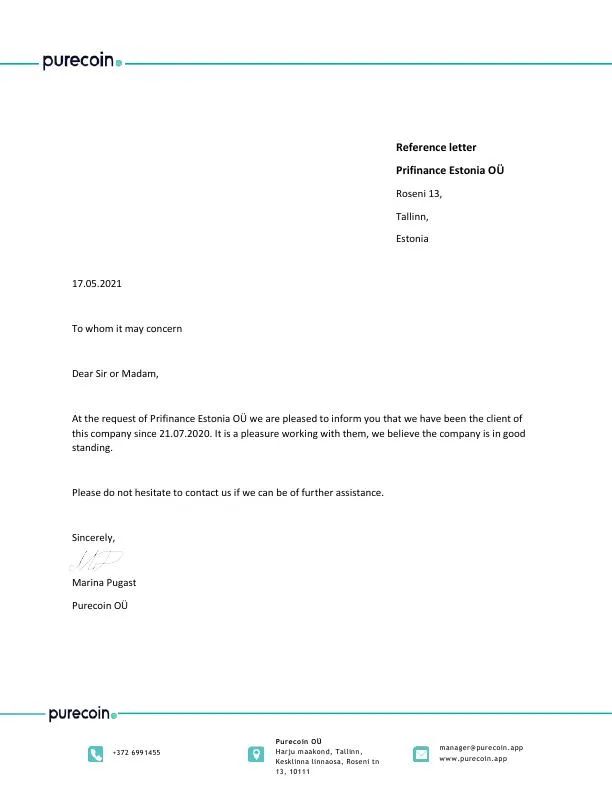
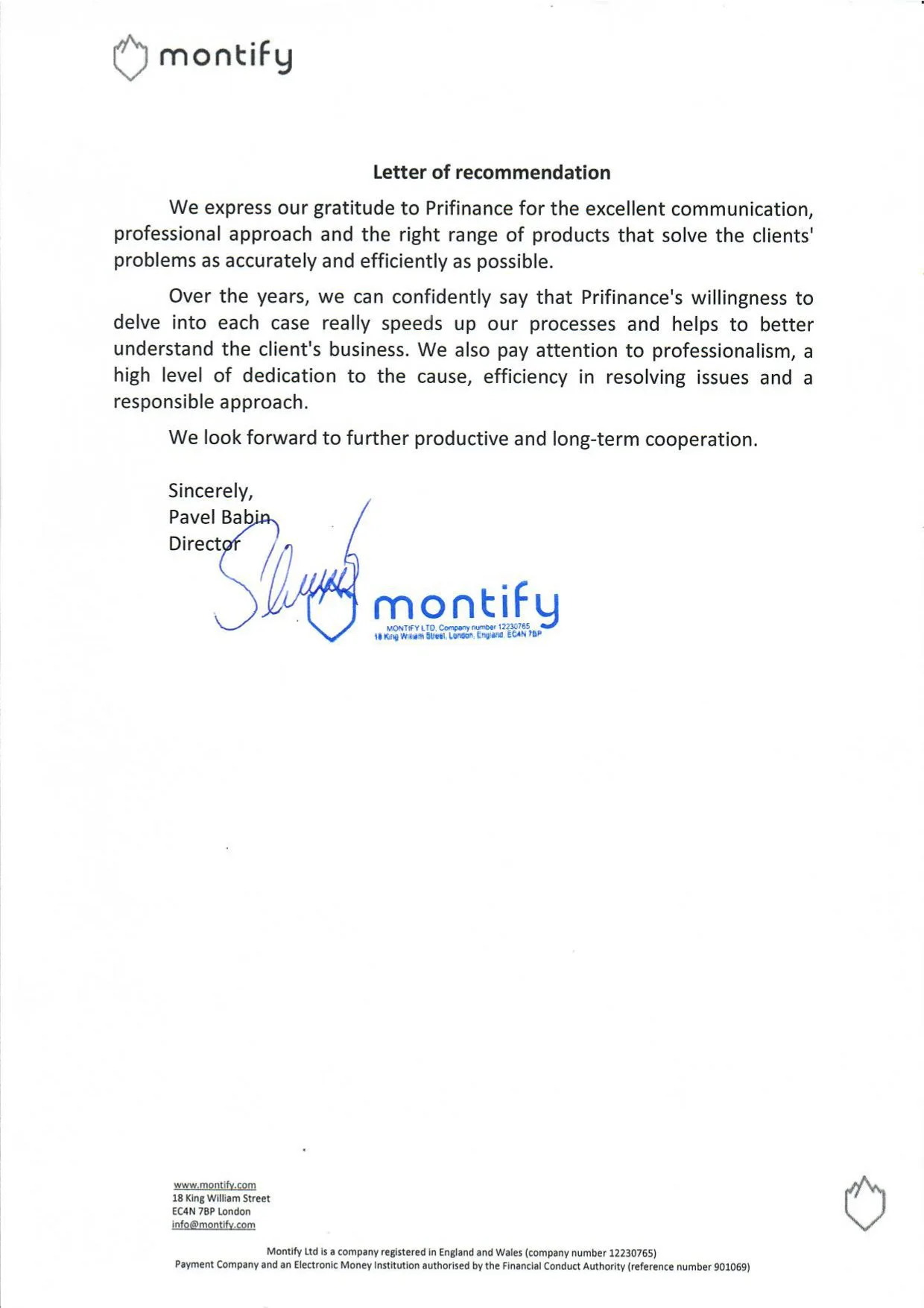
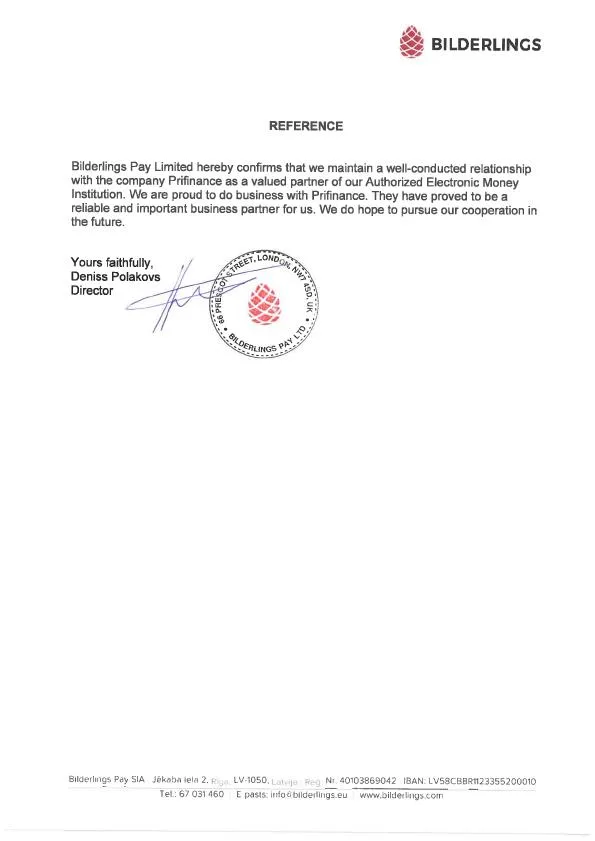
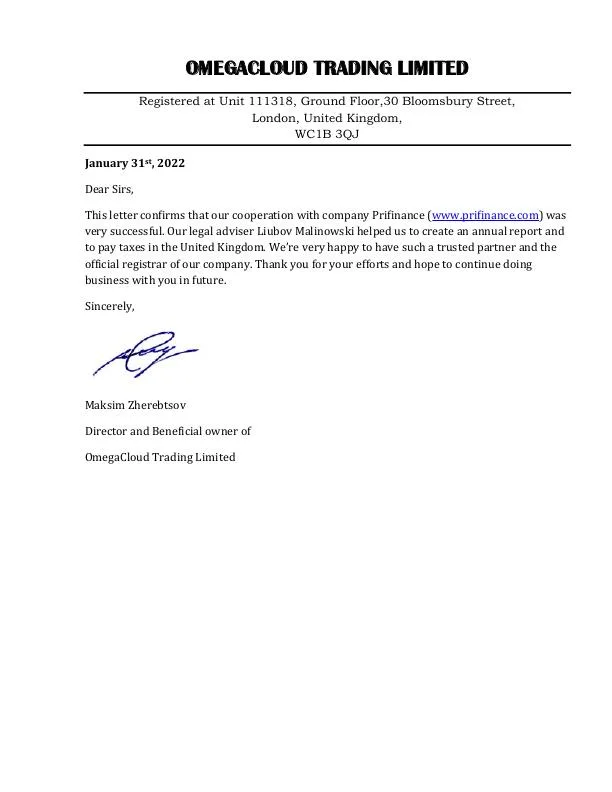
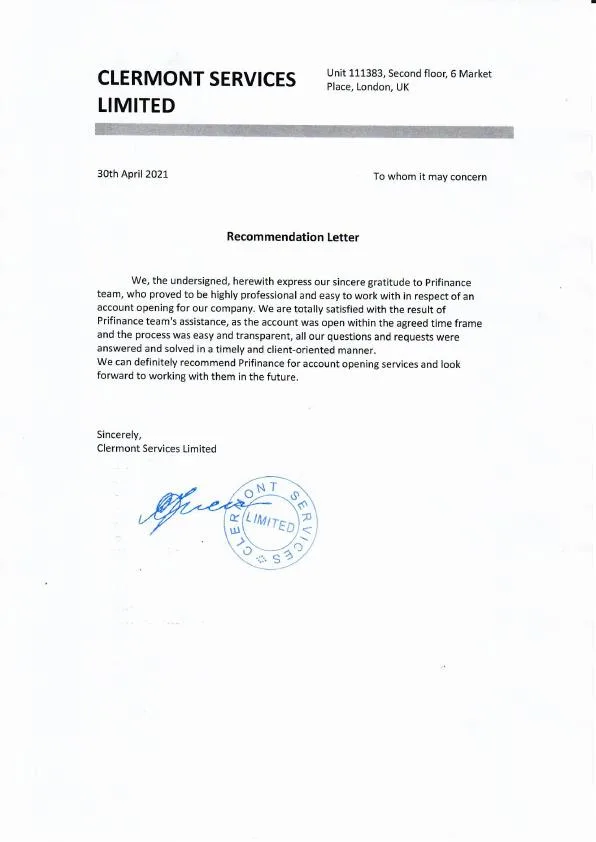
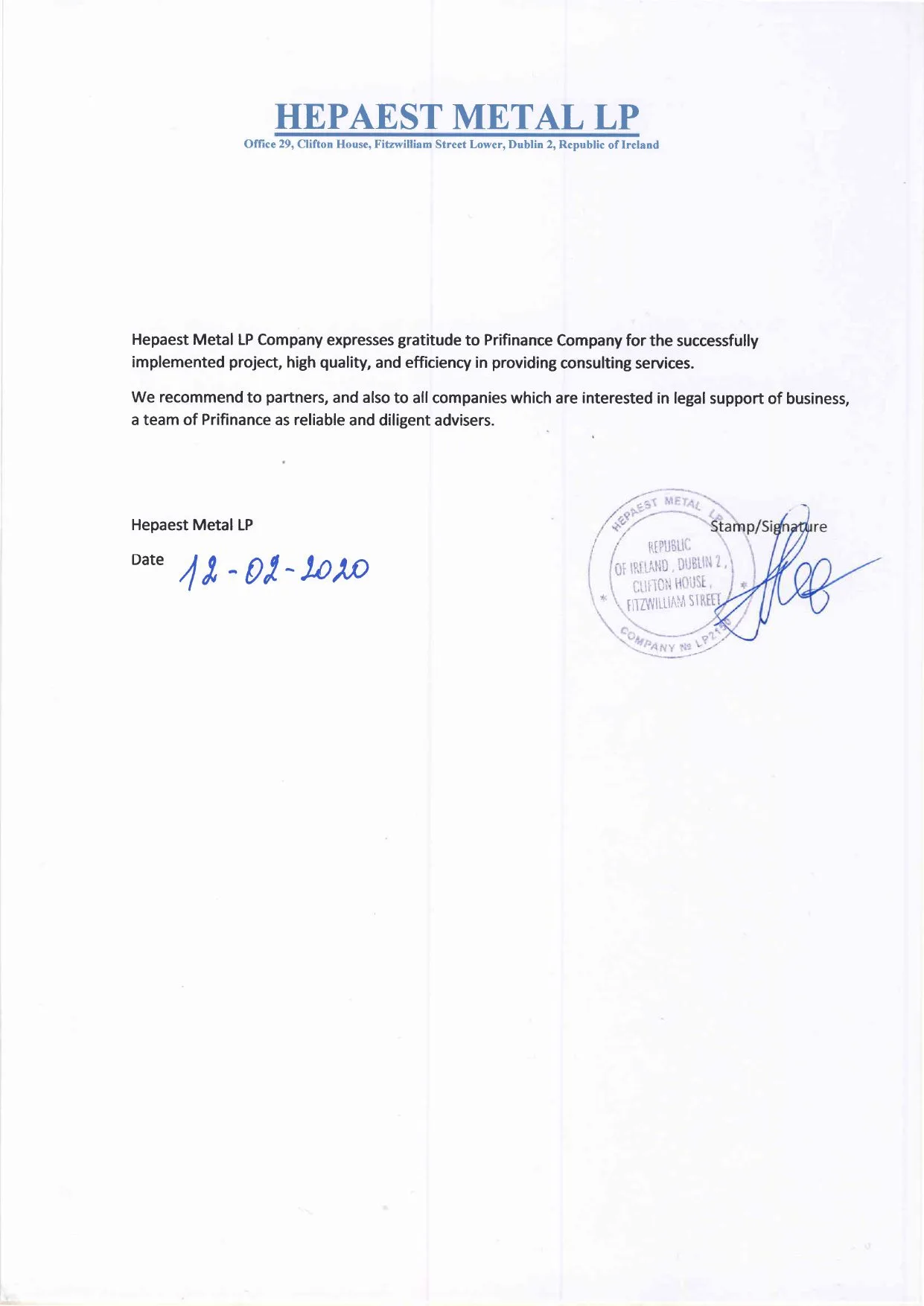
    Letters of recommendations

    Cooperation

    Our partners

    Send an application

    Send your request now and receive our personalized offer!

    Thank you for request!

    Thank you for request!